
Garo Textile
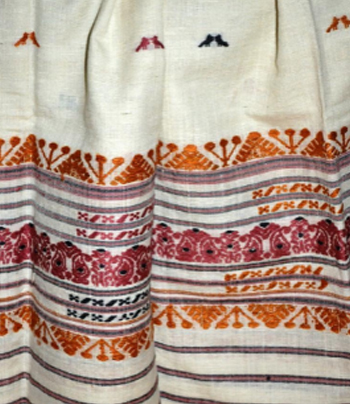
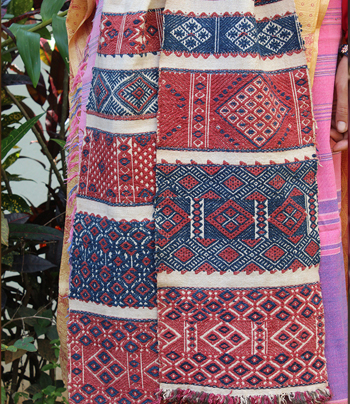
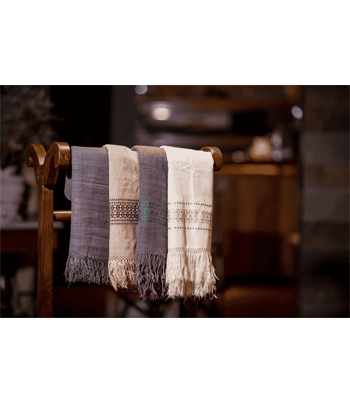
Meghalaya has a rich variety of hand woven textiles, with unique characteristics that reflect the state and its skilled artisans Weaving specimens from the various districts of Meghalaya comprise a wide range and number which themselves as pieces of the precious treasures showing in respect of designing and processing, an accomplishment of great measure. Their distinctive costumes and apparels comprise wrappers, shawls, waistcloths, bodice, girdles, scarf, skirts, aprons and lungis, table cloths, table and bead spreads are the other items prepared by them. Weaving is traditional to the Garos and Garo cloths are noted for their durability and beauty of designs, some of which consists of the diamond type, stripes and wild flowers. The only cloth commonly woven by them are the 'aking' or 'gonna' and 'Damkanda'. “Meghalaya Garo Textile” is an indigenous and traditional designs commonly known as “Dakmanda” produced from different type of yarns through the use of traditional looms.
Meghalaya Garo Textile” is an age old costume of Meghalaya’s Garo tribe which has been kept alive. The Dakmanda is their identity. It’s comfortable and makes for excellent formal wear, especially for ministerial meetings. The lower part of the “Meghalaya Garo Textile” has a border with the traditional concentric diamond motifs woven in. It‟s known as muikron, which means the eye in Garo. Geometric patterns such as straight and zig zag lines as well as crosses are unique to the weave.
Khasi Handloom Products
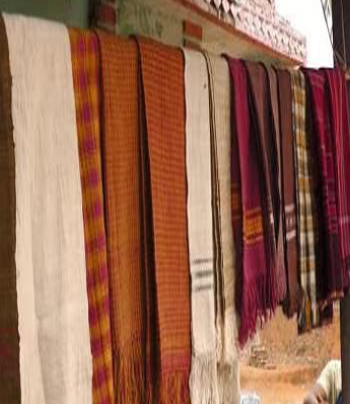
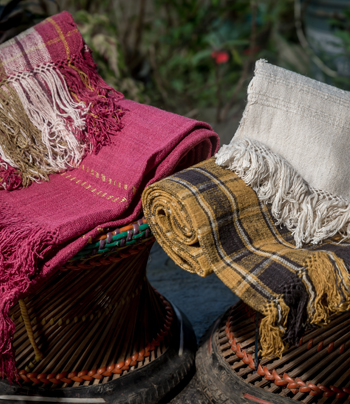
Artistic Sustainable impulse Power of Khasi tribes is providing a rich traditional and cultural heritage in which women can use and improve their weaving skills to create GI Journal No. 197 96 November 27, 2024 artisans products that can be sold both locally and internationally. The symbols from their tribal traditions are interwoven with their artistic work. The weavers women of the Khasi tribes are using natural plant and vegetable dyes, as well as sustainable practices that are aligned with the natural ecosystem in Meghalaya. The distinctive costumes and apparels of the Khasi tribes of Meghalaya comprise wrappers and shawls, waistcloths and bodice, girdles, scarfs, skirts, aprons and lungis resplendent with skilful color combination in their own fashion and style.
Khasi textiles are not just functional; they embody the community's identity and traditions. The garments are often worn during significant cultural events such as weddings and festivals. The intricate designs frequently draw inspiration from local flora and fauna, reinforcing the connection between the people and their environment. Khasi handloom products are characterized by their rich textures, traditional designs, and sustainable production methods. These textiles not only serve practical purposes but also play a vital role in preserving the cultural heritage of Meghalaya’s Khasi community
Ryndia Textile
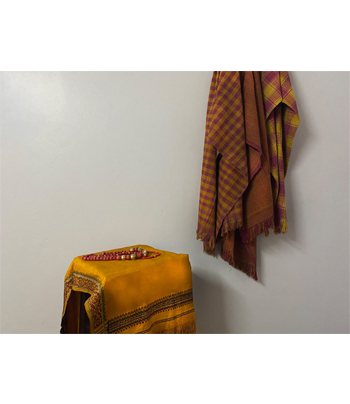
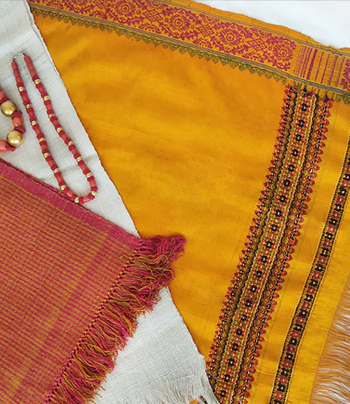
The "Meghalaya Ryndia Textile" is a remarkable and ancient silk fabric with a history that spans over a thousand years. This fabric, commonly known as Peace Silk or Ahimsa Silk, is deeply connected to the cultural heritage of Meghalaya, particularly its indigenous tribes like the Khasi, Bhoi, and Jaintia. The unique feature of Ryndia silk is its eco-friendly production process, which avoids chemical dyes, using only natural and organic dyes derived from local plants. This makes Ryndia a prime example of sustainable textile production.
Ryndia silk, deeply intertwined with the cultural fabric of the Meghaalya district in Meghalaya, holds a rich and captivating history. While it is predominantly associated with Meghaalya today, historical records reveal that Ryndia silk was once reared and woven in various regions, including Mynso, Sutnga, Nongkhlieh, and Saipung in the Jaintia Hills. Ryndia silk woven fabric possesses distinct thermal properties that make it suitable for various weather conditions. These properties are influenced by the natural characteristics Ryndia of Ryndia silk fibers, as well as the weaving structure of the fabric.
End Uses of Ryndia Silk Woven Fabric
Traditional Attire: Ryndia silk woven fabric is often used to create traditional clothing such as sarees, shawls, and dhotis. Its luxurious texture, vibrant colors, and comfortable feel make it an excellent choice for special occasions and cultural events.
Casual and Formal Clothing: Ryndia silk woven fabric is used to craft a range of casual and formal clothing items, including dresses, blouses, tops, skirts, and jackets. Its comfort properties, versatility, and elegant appearance make it suitable for various fashion styles.
Source: Intellectual Property India